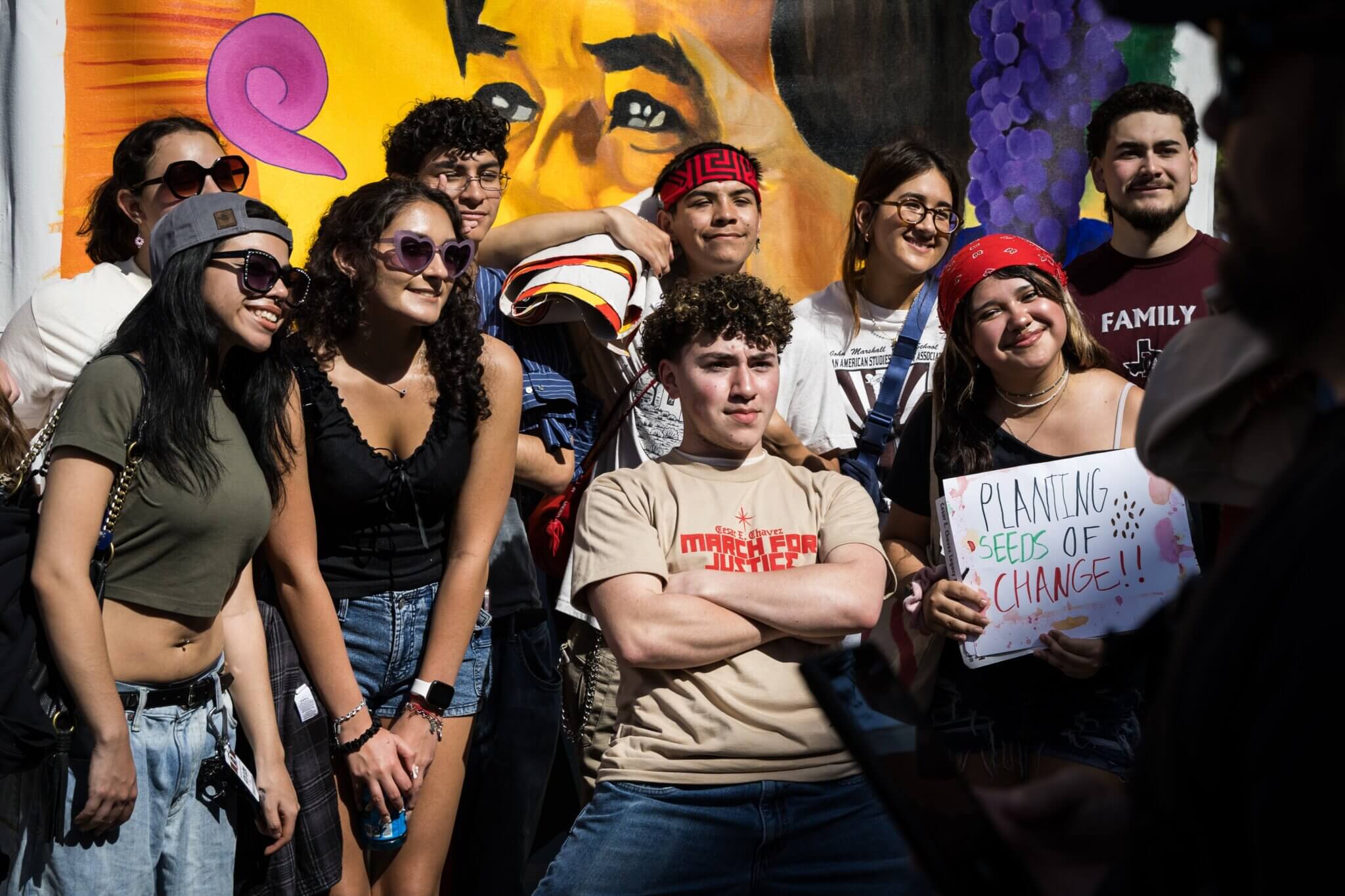
Civics for All program showcases the power of collective action
What does civic engagement look like? UnidosUS’s Civics for All program connects civic topics to our everyday lives. And the program’s impact is growing, extending into some of the country’s most historically underserved communities, including tribal lands and Native American reservations.
By Julienne Gage, former UnidosUS web content manager currently working on a doctorate in sociocultural anthropology at Florida International University
In the lead-up to the 2024 U.S. presidential election, UnidosUS did what it does every cycle: listened to the Hispanic community. It was clear that Latino families want their voices heard but often feel shut out of traditional civic spaces. In response, UnidosUS revived a youth-focused curriculum first developed a decade ago, expanding and renaming it Civics for All: a culturally responsive, multigenerational program designed to strengthen civic engagement and awareness that empowers students, individuals and families to understand their roles as engaged citizens.
Since that time, Civics for All has grown from 5 Affiliates with 210 participants to 41 Affiliates with over 1,200 participants nationwide.
In each cohort, participants discover how civic engagement can take many forms — either through becoming active in their communities, taking on leadership roles, continuing to deepen their civic knowledge, organizing with neighbors, contacting elected officials, having informed conversations at home, or registering to vote.
“Over the course of sessions, I witnessed their confidence grow as they connected civic topics to their own lives — whether it was learning about how school board decisions affect their children’s education or how city policies shape neighborhood safety and resources,” says Luis Andino, a Civics for All curriculum lead at the Latin American Association, an UnidosUS Affiliate based in Atlanta, Georgia.
A broad definition of civic engagement
Aware that Latino and other historically underserved communities are living in a heightened climate of uncertainty, Affiliates and partnering organizations in the Civics for All program have worked to create safe and convenient spaces for families to engage with each other and consider how big changes often start at the local level. In this context, Civics for All directly addresses the impact of media and misinformation by helping participants build critical information literacy and fact-checking skills.
For example, Ivette Esparza, who is in her first year as director of community affairs and advocacy at Acero schools in Chicago, created a Civil Rights Hub: a one-stop digital resource that provides families with emergency planning tools, trusted service organizations and accurate information. This helped mothers of Acero students to develop the knowledge they needed to begin participating in the monthly board meetings of Chicago Public Schools (CPS).
“The Civics for All is an excellent opportunity to train our parents to participate more and understand why it is important,” says Esparza, who also helps to facilitate UnidosUS’s long-standing family engagement program Padres Comprometidos, which seeks to empower parents and strengthen their leadership skills to advocate for their children’s educational opportunities.
A critical moment for civics education
Civics for All’s programmatic predecessor, the High School Democracy Project, began in 2016 with the idea that thousands of secondary students become eligible to vote each year but don’t always register to do so, and may not often have access to vital information as they head to the polls. It started with an overview of the types of government systems, including U.S. democracy, and then expanded into the voter registration process and other ways to become civically engaged.
When Civics for All was relaunched, the program initially centered on parents and families. By the summer of 2025, growing interest and a clear need for civic education prompted UnidosUS to expand its reach to include youth. The content remains relevant and popular to the youth programs of UnidosUS Affiliates. For example, Centro Legal de la Raza in Oakland, California, has been using parts of Civics for All for its already existing Youth Law Academy, which trains its mostly Latino participants to consider careers in the field of law while providing them with a social justice lens for any life vocation. Working in groups, they took art supplies and clipped up magazines to create posters about issues they cared about in their communities, which in turn helped them to reflect on justice issues close to home.
“The key takeaways included the importance of being present, spending time with family and friends, being proactive, and learning from the group’s collaborative work,” says Youth Law Academy Program Director Mara Chavez-Diaz, who noted that as a result, participants were more prepared and confident to network and ask pointed questions when they later went on a career pathways field trip to meet with some criminal justice attorneys.
Expanding reach, deepening impact
The national reach of UnidosUS’s civics programming has extended into some of the country’s most historically underserved communities, including tribal lands and Native American reservations.
In the Southwest, the Pascua Yaqui Tribe began collaborating with Amistades Inc. to implement this culturally responsive Civics for All program in the summer months, when students have fewer structured learning opportunities. Tribal leaders recruited families, provided program space, and shared their perspectives on what leadership and advocacy should look like within their territory. Together with Amistades Inc., they incorporated role-playing activities where parents and caregivers could practice engaging with school administrators on important issues such as resource allocation and academic support.
“One of the most impactful moments came during a discussion on the power of collective action,” says Maria Alvidrez, director of programs at Amistades. “We encouraged parents to see themselves as part of a larger community capable of initiating meaningful change. Many participants left the session feeling more confident about attending school meetings, speaking up during PTA events and organizing with other parents to address shared concerns.”
Meanwhile in Durham, North Carolina, El Centro Hispano helped its participants consider the ways government policies impact them across various geographic settings by engaging several high-profile guest speakers.
Sharon Trapp, director of community partnerships and engagement for Durham County, explained city and county jurisdictions. This came in handy when some of the participants raised concerns about which officials to call about a malfunctioning traffic light.
Donají Alba Arroyo, the new consul at the Consulate General of Mexico in nearby Raleigh, offered a transnational perspective on equality, equity, justice and community engagement — an evergreen set of concerns rendered especially urgent by this past year’s U.S. Immigration and Customs Enforcement (ICE) raids and mass deportations.
“In this program, I learned about the legislative process in government, how to vote, and ways to advocate. It showed me how to reach more people and help share these resources with the community,” a participant of the program reported to El Centro Hispano organizers in an anonymous postcourse survey. “This program also taught me how to communicate with elected officials during advocacy efforts, how to approach them with specific issues, and what times and locations work best.”
Building confidence across generations
A defining feature of Civics for All is its family-centered, intergenerational approach, which reinforces civic participation as a shared responsibility. At Youth Policy Institute Charter Schools (YPICS) in Los Angeles, California, mothers of middle school students registered to vote for the first time. At the Mission Economic Development Agency (MEDA) in San Francisco, California, Civics for All aligned seamlessly with active election campaigns, allowing participants to immediately apply what they learned through canvassing and volunteering. Facilitators across the country emphasize that Civics for All works because it meets people where they are. Going forward, UnidosUS has created an Early Childhood Education—Civics for All version of the curriculum that has been intentionally aligned with the Latino Infant Initiative (LII). By drawing on the insights of Latino families, advocates and practitioners, this curriculum reflects the program’s commitment to culturally and linguistically responsive learning experiences that support the healthy development and civic engagement of young children and their families.
“Engaging parents and caregivers in civic learning during their child’s earliest years is one of the most powerful investments we can make,” says UnidosUS Family Engagement Program Manager Nadia Hernandez. “When families understand how systems work and how their voices shape those systems, they become stronger advocates for their children’s education, health and future. Early Childhood Education–Civics for All gives parents and caregivers the tools and confidence to champion their children’s future from the start.”