From fear to float: Swim program builds futures for South Florida children
In Miami-Dade County, a groundbreaking public-private partnership between Head Start, local government and youth-centered organizations is teaching thousands of preschoolers and kindergarteners vital water safety skills. These free lessons at local pools connect numerous partners to address drowning — the leading cause of accidental death among local children.
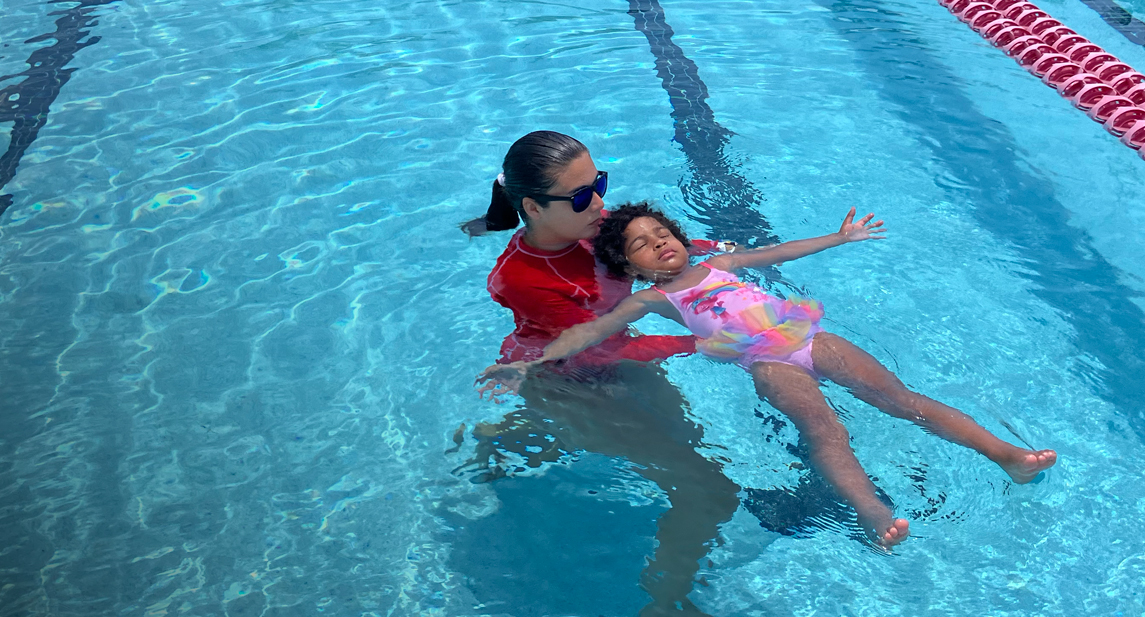
On a steamy late May afternoon in subtropical Miami-Dade County, a group of four and five-year-old Hispanic children spent part of their school week floating and paddling in a public pool as two lifeguards gently held and guided them.
“Keep your head back and your arms and legs out,” one lifeguard said as he showed them how to float. “If you put your head down, you’ll sink.”
Minutes later, five-year-old Luna emerged from the water looking triumphant as she stretched out her arms and thrust her head back.
“I used to be afraid of the water but now I know I can float like a starfish,” she told ProgressReport.co as she stared intently at the sky.
The scene is not only an example of early life-skills training; it’s a metaphor for starting young children off on a path to success. When it comes to early childhood education, UnidosUS has long advocated for funding and other support for Head Start because of the way it tailors itself to the local needs of the families it serves. This summer, UnidosUS is hailing a Florida-based public-private partnership between Head Start, Miami-Dade County and numerous other foundations and youth-centered organizations helping Luna and several thousand other pre-K and kindergarten students develop a culture of water safety.
Drownings are on the rise across the nation, and in Miami-Dade County, constant access to water in the form of the ocean, canals, lakes and pools, contribute to making drowning the leading cause of accidental death among children ages 1 to 14, according to the Florida Department of Health. But according to a Florida TaxWatch report, learning to swim can reduce the risk of drowning by as much as 88%, making swim safety education and policy initiatives a crucial investment.
Last year, Miami-Dade County pooled resources and ideas with several of its municipalities, as well as private companies, leading non-profit organizations and educational institutions to create ZERO Drownings Miami-Dade Initiative, a public-private pilot program aimed at instilling a culture of water safety in young children and their families.
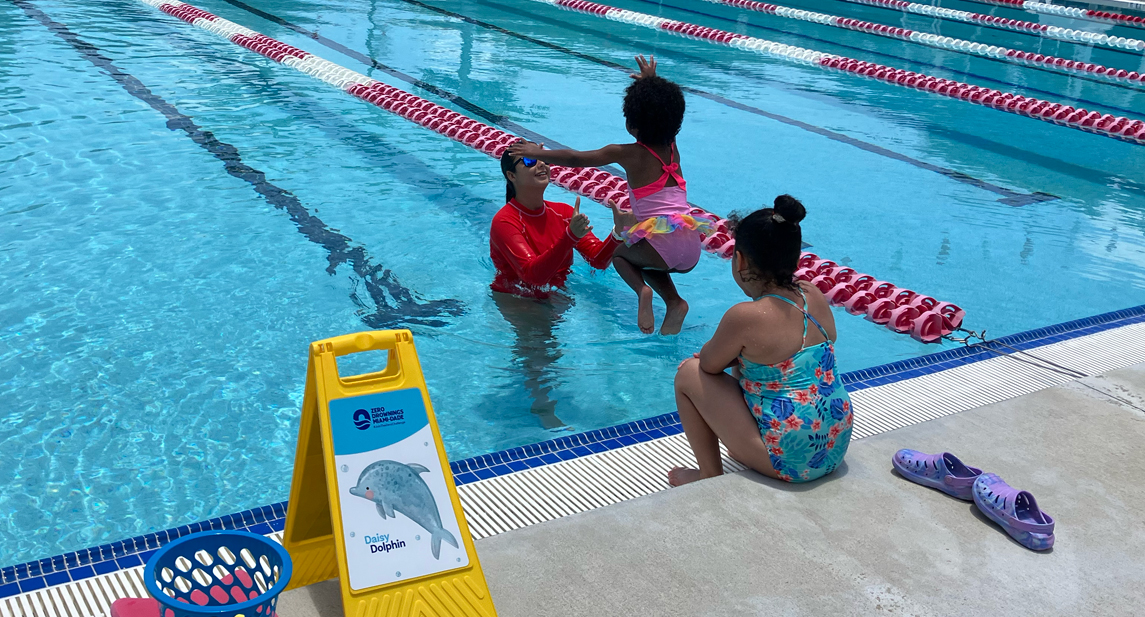 Throughout the school year, the program buses children from select pre-K programs run by Head Start and The Children’s Trust’s Thrive by Five, as well as kindergarten classes from Miami Dade County Public Schools to local pools for 10 days of 30-minute daily water safety lessons. The idea is that many parents, especially those in working class communities, don’t have the time or resources to enroll their children in swim lessons, and in fact, they might not even be aware of how serious the problem of drowning is or what preventative tools are available to stop it.
“We solve that issue by providing free school year classes. Parents don’t have to go to the sites and transport the kids,” explains Jim O’Conner, the aquatic regional manager for Miami–Dade Parks and Recreation Open Spaces Department and an original visionary of the program.
His hope is that the program becomes a national model for early education on drowning prevention and other life skills development, especially at a time when public budgets are scarce. During this year’s pilot phase of the program, the county built an Office of Drowning Prevention inside its own Parks, Recreation and Open Spaces department to serve as a logistics hub. From there, it is better able to monitor the program while expanding its impact through its larger public-private collaboration.
The Children’s Trust is the program’s primary funder and collaborates with the Miami-Dade County Office of the Mayor and The Miami Foundation to secure additional private and public support. Other funding partners include the American Red Cross, United Way Miami, The EduFoundation, Templeton Family Foundation and the Parks Foundation. The American Red Cross provides the county’s lifeguard and swim instructor certification and vets the swim safety curriculum. Miami-Dade County Community Action and Human Services Department (CAHSD) provides the staff and vehicles for transportation while The Children’s Trust provides the funding for transportation-related expenses. The Children’s Trust and United Way both provide in-kind marketing and promotional support, and municipalities including the City of Miami and the City of Miami Springs offer their pools to the program to ensure a short 15-minute commute.
“Bringing the public and private sectors together makes a real difference in delivering this critical service,” says Flora Beal, public affairs administrator at CAHSD, which oversees the local Head Start program.
“This is an innovative example of how to leverage a federally-funded program like Head Start to bring together state and local stakeholders, even when resources are limited, in a partnership that provides kids an opportunity to learn a new skill and instill confidence in themselves that will pay dividends during their academic career,” says Jared Nordlund, Florida state director at UnidosUS.
The program comes just as Miami-Dade County Mayor Daniela Levine-Cava is facing a much bigger financial crisis than she anticipated when she was elected for a second term in 2024, but Biel says it’s right in line with Mayor Cava’s vision for wiser spending and programming.
“We’re streamlining access to services — removing red tape, increasing accessibility — and doing it at no additional cost to families or childcare providers. That’s especially vital for our lower-income communities, where families often lack the time or resources for swim lessons,” Beal explains.
“It’s really cool to see the power of partnerships when we put our heads, budgets and time together,” says The Children’s Trust of Miami-Dade County Communications Director Ximena Nunez, adding that in the future, Zero Drownings Miami-Dade Initiative would like to see retail companies provide swimwear and aquatics equipment.
How water safety awareness works
O’Conner prefers to call this water safety curriculum one of “water safety awareness” since the primary goal is to ensure children are both wary of and comfortable with water before fully learning to swim.
“We don’t necessarily call these swim classes because at this age and this number lessons, their stroke isn’t going to be perfect,” O’Conner explains. “We’re teaching buoyancy and propulsion. If they fall in the water, they know how to float, and they’ll be able to turn around and make it back to the side.”
To complement these classes, the Zero Drownings Miami-Dade Initiative program also encourages parents to review their American Red Cross-certified online water safety course, which is available to all members of the public in the county’s three main languages: English, Spanish and Haitian Creole. The course provides key prevention and emergency response techniques such as placing alarm sensors on doors that give access to canals or lakes, and reminds viewers that Florida law requires homes and residential buildings to have a four-foot fence around pools.
Over the next two years, The Zero Drownings Miami-Dade Partnership program hopes to scale up the program so that 20,000 pre-K and kindergarten children can participate. At the same time, its collaborators are hopeful publicity about the program will help families, even those whose schools aren’t participating, look into other free and low-cost swim programs. For example, anyone can sign up for Miami Dade Parks’ Learn2Swim classes for as little as $10 per 45-minute session, and that includes after-school and summer classes for all school-aged youth.
“Most people in Miami-Dade County don’t know how to swim, and if a parent doesn’t know how to swim, then their children aren’t necessarily going to be encouraged to learn, so it’s overcoming those barriers and reaching everyone,” O’Conner says.
During the water safety lesson ProgressReport.co attended, a four-year-old who had been terrified of the water days earlier was now gleefully paddling toward her instructor, even though she’d accidentally belly flopped while jumping into the water.
“It’s so cool to see their confidence and what they can accomplish when they feel safe with those instructors,” Nuñez says.
That’s an especially important message for historically underserved children, says Beal, who spends a lot of her time considering how to plant seeds of self-confidence and community networking.
“From a Head Start perspective, this is about more than just water safety,” Beal adds. “It’s about giving children the confidence, self-awareness and social skills they need to thrive — and helping them build a love for learning. Even when they’re scared at first, they learn that with support, effort, and courage, they can succeed.”
–Author Julienne Gage is a former UnidosUS senior web content manager and a former public information officer for Miami-Dade County Parks, Recreation and Open Spaces now working on a PhD in sociocultural anthropology at Florida International University.